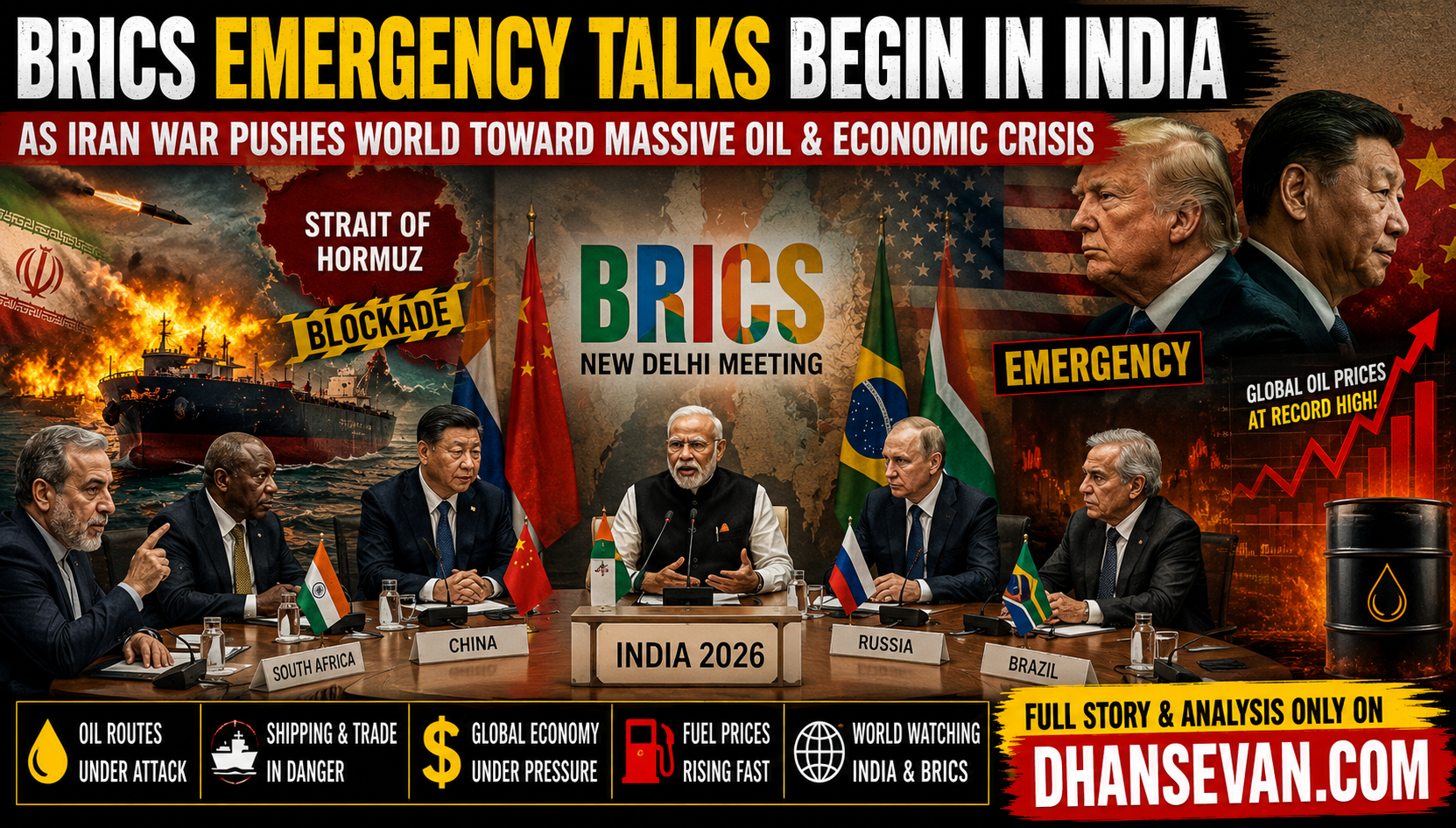
World Nears Major Oil Crisis: Indian Ship Sunk Near Hormuz As Trump, Xi Hold Emergency Iran War Talks
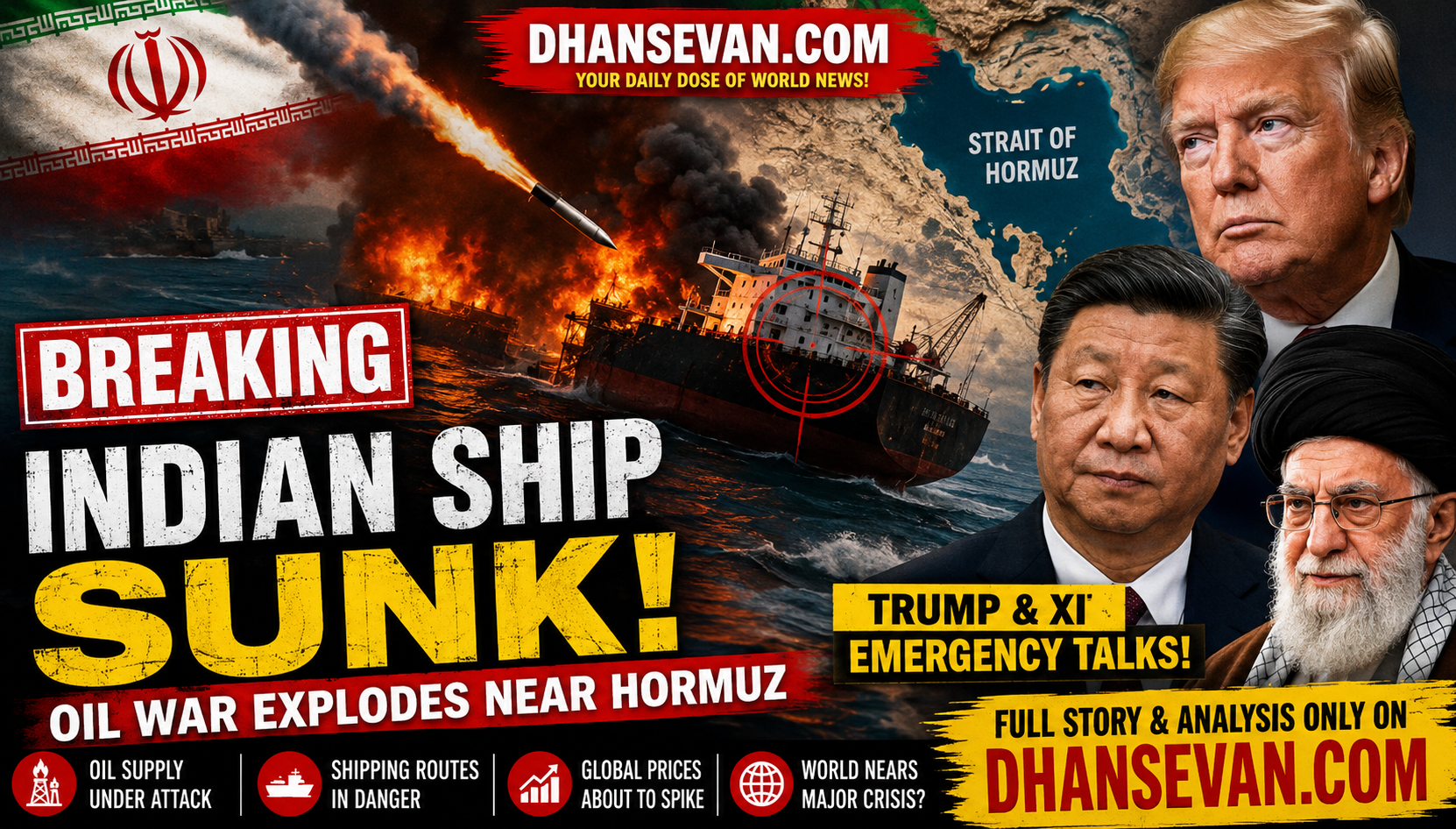
Global tensions escalated dramatically after an Indian cargo vessel was reportedly sunk near the Strait of Hormuz while Donald Trump and China’s Xi Jinping held urgent talks over the worsening Iran conflict. With attacks on ships increasing, oil routes disrupted, and global energy markets under pressure, fears are growing that the world could be heading toward one of the biggest economic and geopolitical crises in years.
Uday Jasani
Gaming Expert · Dhansevan Editorial Team
The Global Crisis Around The Strait Of Hormuz Is Getting Exponentially More Dangerous
The world moved terrifyingly closer toward a major, uncontrollable international crisis this week after fresh, devastating attacks near the Strait of Hormuz intensified profound fears of a prolonged, structural global energy disruption.
The highly volatile situation became infinitely more alarming after an Indian commercial cargo vessel, innocently navigating international waters, was reportedly sunk off the coast of Oman following a suspected, highly sophisticated missile or drone strike. This brazen attack on a neutral nation's vessel has completely shattered any remaining illusions of safety in the region.
At the exact same time, in a desperate bid to prevent global economic collapse, US President Donald Trump held urgent, high-stakes, closed-door discussions with Chinese President Xi Jinping in Beijing. Both powerful leaders attempted to address the rapidly escalating Iran conflict and its catastrophic impact on global oil supply routes, which are currently bleeding the world economy dry.
With international diplomacy hopelessly stalled, aggressive attacks on commercial ships steadily increasing in frequency and severity, and global energy markets already under severe, unprecedented stress, top geopolitical analysts now deeply fear the situation could rapidly spiral into one of the most serious, defining military and economic crises of the 21st century.
Why The Strait Of Hormuz Matters Intensely To The Entire World
To understand the gravity of the crisis, one must understand the geography. The Strait of Hormuz is not just another maritime shipping route; it is the absolute jugular vein of the global energy economy.
This narrow, highly strategic waterway, connecting the Persian Gulf to the open ocean, is undeniably the world’s most critical oil transport corridor. A massive, irreplaceable portion of global crude oil exports—historically representing up to 20% to 30% of global daily consumption—must pass through this perilous chokepoint every single day to reach refineries in Asia, Europe, and beyond. Any disruption, however minor, in this narrow waterway immediately and violently affects global fuel prices, complex energy markets, international shipping costs, domestic inflation rates, and the very fabric of global trade.
Since the horrific Iran conflict intensified, the heavily militarized region has witnessed repeated, terrifying military tensions, severe shipping restrictions, arbitrary vessel seizures, and direct kinetic attacks on massive oil tankers moving through nearby waters.
Iran, utilizing its strategic geographic advantage, has already successfully restricted large portions of maritime movement in the region. By creating an atmosphere of intense fear and uncertainty, they have effectively orchestrated the biggest, most impactful disruption to global energy supplies seen in modern history, weaponizing geography against the world economy.
Unprovoked Attack On Indian Cargo Vessel Triggers Deep International Concern
One of the most disturbing, escalatory developments in recent weeks occurred after an Indian-flagged commercial cargo vessel was brutally attacked off the coast of Oman, far from any active conflict zone.
According to verified international maritime reports, the ill-fated ship was quietly carrying a routine cargo of livestock from East Africa to the United Arab Emirates when it was suddenly and allegedly struck by an advanced loitering munition (drone) or an anti-ship missile. The strike caused a massive, catastrophic explosion that breached the hull and eventually sank the massive vessel within hours.
The Indian government strongly and unequivocally condemned the cowardly attack, calling it a blatant violation of international maritime law and freedom of navigation. Fortunately, Indian authorities confirmed that all 14 civilian crew members were rescued safely from life rafts by the highly responsive Omani coastguard, averting a tragic loss of human life.
However, the successful attack immediately raised fresh, paralyzing fears about the absolute lack of safety on commercial shipping routes in the Arabian Sea and nearby Gulf waters. If a livestock carrier can be targeted, massive oil tankers are sitting ducks.
Trump And Xi Jinping Hold High-Stakes Emergency Talks In Beijing
As the maritime crisis rapidly intensified and oil prices surged, Donald Trump unexpectedly traveled to Beijing to meet Chinese President Xi Jinping for highly sensitive, emergency discussions focused almost entirely on Iran, securing vital oil routes, and preventing regional collapse.
According to senior US administration officials briefing the press, both world leaders forcefully agreed that the Strait of Hormuz must absolutely remain open to international shipping and that Iran should never be permitted to obtain nuclear weapons, which would further destabilize the region.
This unprecedented meeting is being viewed globally as extremely significant because China possesses unique leverage. China remains one of Iran’s closest, most vital economic lifelines and is historically one of the largest, most consistent buyers of sanctioned Iranian oil.
Geopolitical analysts widely believe the United States is now desperately hoping China can utilize its immense economic leverage to pressure Iran into reducing maritime restrictions, halting attacks on shipping, and helping stabilize the terrifying shipping crisis before it triggers a global recession.
Global Oil Markets Are Already Cracking Under Extreme Pressure
The ongoing, terrifying military standoff is now creating massive, undeniable economic concerns across the entire world, threatening post-pandemic recoveries.
Due to skyrocketing insurance premiums and the unacceptable risk to human life and multi-million dollar vessels, only a tiny fraction of the usual shipping traffic is currently daring to pass through the Strait of Hormuz compared to normal, peacetime conditions.
Even though some courageous Japanese and Chinese mega-tankers have recently crossed after intense back-channel diplomatic negotiations and heavy naval escorts, overall shipping activity remains far, dangerously below the regular levels required to keep the global economy functioning.
Economic experts vehemently warn that if these severe disruptions continue for even a few more weeks, countries heavily, structurally dependent on imported oil — notably including emerging giants like India — could face disastrous consequences:
- **Sharp, unsustainable fuel price increases:** Breaking the back of the working class.
- **Runaway, hyper-inflation:** Destroying household savings and purchasing power.
- **Exorbitant transportation costs:** Crippling domestic trade and exports.
- **Immense pressure on airlines and logistics:** Forcing bankruptcies in the transport sector.
- **Significantly slower economic growth:** Pushing vulnerable economies into deep recession.
- **Massive supply chain disruptions:** Leading to shortages of critical goods and medicines.
Global financial markets, stock exchanges, and currency traders are closely, nervously monitoring the volatile situation hour by hour, as energy prices continue wildly fluctuating, destroying predictable business planning.
Diplomatic Peace Talks Appear To Be Failing Completely
One of the most profoundly worrying aspects of the current crisis is the apparent, complete collapse of any meaningful, productive peace negotiations between the warring parties.
After weeks of devastating bombing campaigns, naval skirmishes, and intense international pressure from the UN and regional allies, direct and indirect talks between Iran and the United States remain hopelessly stalled, mired in deep mistrust and ideological rigidity.
Both sides reportedly continue stubbornly insisting on maximalist demands that the other side considers absolutely unacceptable and tantamount to surrender.
Washington is uncompromisingly demanding that Iran permanently stop all uranium enrichment, hand over highly sensitive nuclear material, and cease funding regional proxy militias. Conversely, Iran is fiercely demanding immediate, total sanctions relief, massive financial compensation for extensive war damage, and formal international recognition of its absolute control over contested regional waters.
With neither side showing any willingness to back down or compromise, the terrifying possibility of a prolonged, deeply entrenched geopolitical deadlock—punctuated by violence—is becoming increasingly, depressingly likely.
The Entire World Economy Will Feel The Devastating Impact
What makes the current situation especially dangerous, unlike crises of the past, is how deeply and intricately interconnected global economies have become in the 21st century.
A regional, localized conflict centered around one specific, strategic water route is now actively and maliciously influencing:
- Global fuel prices at every local pump.
- The daily performance of major stock markets from Wall Street to Dalal Street.
- The operational viability of global airline networks.
- The survival of massive international shipping industries.
- The cost of food transportation, leading to potential food insecurity.
- Global inflation levels, forcing central banks into difficult policy corners.
- International trade routes, forcing ships to take vastly longer journeys around Africa.
- Currency markets, causing massive devaluations in emerging economies.
Countries across Asia are already taking desperate, unprecedented precautionary measures to prepare for potential long-term, catastrophic disruptions.
Several panicked governments are dramatically increasing energy rationing efforts, aggressively tapping into strategic petroleum reserves, while massive global businesses entirely dependent on predictable oil prices and logistics remain extremely cautious, freezing hiring and halting expansion plans.
Iran’s Growing Asymmetric Leverage Is Changing The Equation
Despite months of intense, coordinated international pressure and overwhelming military operations by superior forces, Iran still stubbornly appears highly capable of exerting enormous, asymmetric influence over the movement of global energy.
Its undeniable, proven ability to restrict, threaten, and effectively choke shipping through the Strait of Hormuz using cheap drones, fast attack craft, and sea mines has now clearly become one of its strongest, most potent negotiating tools on the world stage.
That immense leverage is making the crisis infinitely far more difficult to resolve through traditional diplomatic means, as Tehran feels it holds the ultimate trump card.
Military analysts say the longer the standoff continues, the greater the severe risk of wider, uncontrollable regional instability, dragging neighboring countries into the conflict, and resulting in far deeper, permanent economic consequences worldwide.
The World Is Watching Nervously To See What Happens Next
For now, the anxious attention of the entire globe remains fixed squarely on three major, unanswered questions that will dictate the future:
- Will brazen attacks on neutral commercial ships continue increasing, forcing a total closure of the Strait?
- Can the combined economic and diplomatic pressure of the United States and China successfully force Iran toward a meaningful compromise?
- Will the Strait of Hormuz fully, safely reopen soon enough to prevent a global recession?
If delicate diplomacy fails completely and military escalation continues, economic experts starkly warn the world could soon face severe, unprecedented energy shortages, massive economic instability, soaring unemployment, and a prolonged geopolitical confrontation that could reshape the global order.
What initially began as a complex, historical regional conflict has now rapidly and undeniably morphed into a terrifying global crisis, carrying catastrophic consequences that will inevitably affect billions of innocent people living far, far beyond the borders of the Middle East.
About the Author
Uday Jasani
The Dhansevan editorial team consists of passionate gamers and tech enthusiasts who test and review every game before publishing. Our writers bring first-hand gaming experience and follow strict editorial standards to ensure accurate, helpful content for our readers.
Disclaimer: This article is for informational purposes only. Game features, availability, and earning potential may vary. Always download games from official sources and read their terms of service. Dhansevan does not guarantee any specific results from using the apps mentioned above.