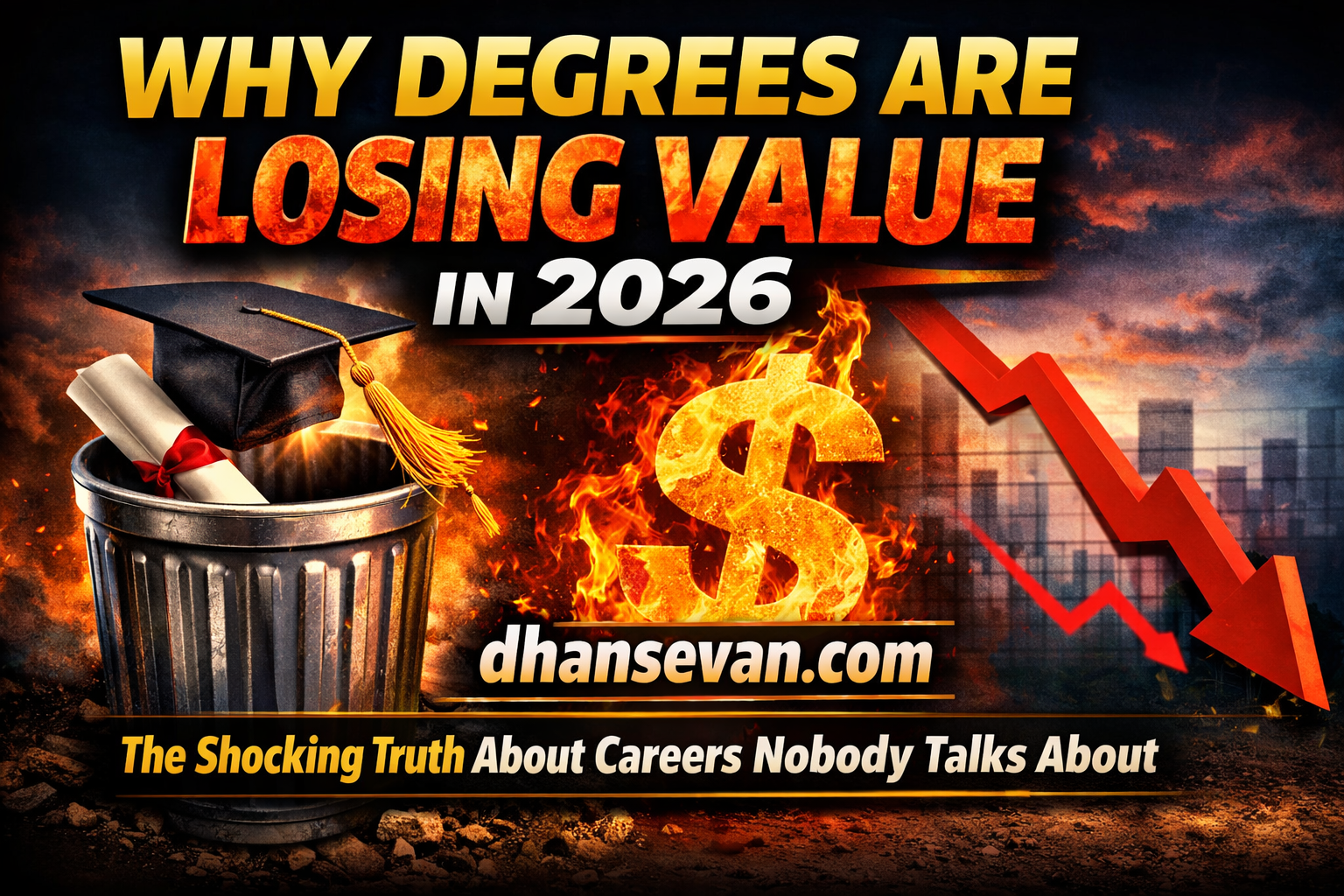
The One Unfair Strategy in The Truth About the Education System — Why It Doesn’t Prepare You for Real Life That Will Decide Everything
The education system promises success, but many people still struggle in real life. Discover why the system may not be preparing you for the future in 2026.

Dhansevan Team
Gaming Expert · Dhansevan Editorial Team
The Indian education system produces millions of graduates every year, yet a growing number of them find themselves unprepared for the realities of professional life, financial decision-making, and personal growth. In 2026, this gap between academic achievement and real-world readiness is more visible than ever as the economy rapidly shifts toward digital skills, entrepreneurship, and adaptability.
This article examines why the traditional education system falls short in preparing students for real life, what skills are actually needed for success in modern India, and what students and young professionals can do to bridge the gap.
---
The Core Problem: A System Designed for a Different Era
India's education system was largely designed during the post-independence era to create a workforce for government jobs and manufacturing industries. The emphasis was on standardized testing, memorization of facts, and hierarchical respect for authority. While this system successfully created a large literate population, its fundamental design has not kept pace with the 21st-century economy.
In 2026, employers consistently report that fresh graduates lack critical thinking skills, practical problem-solving ability, communication confidence, and financial literacy. A 2025 survey by Aspiring Minds found that only 20% of Indian engineering graduates are employable in their field without additional training. This is not because students are unintelligent — it is because the system measures the wrong things.
---
What the Education System Teaches vs. What Life Demands
What Schools and Colleges Focus On: - **Memorization**: Students are trained to memorize textbook content and reproduce it in exams. This develops short-term recall but not deep understanding or application ability. - **Standardized testing**: Success is measured by marks in exams that test a narrow range of cognitive abilities. Creative thinking, collaboration, and practical skills are rarely assessed. - **Theoretical knowledge**: Subjects are taught in isolation with heavy emphasis on theory. A commerce student learns accounting theory but not how to actually file taxes or manage a business budget. - **Compliance and conformity**: The system rewards students who follow instructions precisely and penalizes those who question or deviate from established methods.
What Real Life Actually Requires: - **Communication skills**: The ability to articulate ideas clearly in writing, speaking, and presentations is essential for every career. Yet most Indian schools do not include practical communication training. - **Financial literacy**: Understanding how money works — budgeting, investing, taxation, insurance, loans, and compound interest — is crucial for life but completely absent from most curricula. - **Decision-making under uncertainty**: Real life rarely presents clear right-or-wrong answers. Success requires the ability to make decisions with incomplete information and manage risks. - **Digital and technology skills**: In 2026, basic digital literacy is as essential as reading. Understanding how to use productivity tools, social media for business, and basic data analysis is required across all industries. - **Emotional intelligence**: Managing stress, building relationships, negotiating, handling rejection, and working in teams are skills that directly impact career success and personal well-being.
---
The Marks vs. Skills Problem: Real Examples
Consider two graduates entering the job market in 2026:
**Graduate A** scored 85% in their engineering degree. They can solve textbook problems but struggle in job interviews because they cannot explain their thought process clearly. They have never worked on a real project outside of college assignments. Their resume lists marks but no practical experience.
**Graduate B** scored 65% but spent college years building projects, freelancing online, running a small Instagram business, and participating in hackathons. Their resume shows real-world results — a freelance portfolio, a social media page with 10,000 followers, and two internship experiences.
In nearly every hiring scenario in 2026, Graduate B gets the job offer. This is not speculation — it reflects the consistent feedback from HR professionals and hiring managers across Indian companies.
---
The Missing Financial Education
Perhaps the most damaging gap in Indian education is the complete absence of financial literacy. Most graduates enter the workforce without understanding fundamental concepts like compound interest and how it affects both savings and debt, the difference between assets and liabilities, how income tax works and how to optimize it legally, why health and life insurance are necessities not luxuries, and how SIPs and index funds can build wealth over time.
This financial ignorance leads to poor decisions — taking expensive personal loans for unnecessary purchases, not starting investments early, falling for get-rich-quick schemes, and living paycheck to paycheck despite decent salaries. A single personal finance course in college could prevent millions of Indians from making costly financial mistakes.
---
What Smart Students Are Doing Differently in 2026
The most successful young Indians are not waiting for the education system to change — they are supplementing their formal education with self-directed learning. Here is what sets them apart:
- **Learning digital skills online**: Free resources on YouTube, Coursera, and Khan Academy teach everything from coding to marketing to design
- **Building portfolios instead of just collecting degrees**: Creating real projects, writing blogs, developing apps, or managing social media accounts for small businesses
- **Starting to earn during college**: Through freelancing, content creation, tutoring, or platforms like DHAN7 Game and other earning opportunities available on Dhansevan
- **Reading widely beyond textbooks**: Books on personal finance, psychology, business, and communication
- **Networking actively**: Using LinkedIn, attending events, and connecting with professionals in their target industry
---
What Needs to Change in Indian Education
While systemic change is slow, several improvements would dramatically increase the real-world readiness of Indian graduates:
- **Mandatory financial literacy courses** from class 10 onwards covering budgeting, investing, taxes, and basic accounting
- **Communication and presentation skills** integrated into every subject, not just English class
- **Project-based learning** where students solve real problems rather than just answer exam questions
- **Exposure to entrepreneurship** through school-level business plan competitions and startup simulations
- **Mental health and emotional intelligence** education to prepare students for the psychological challenges of adult life
---
Practical Steps You Can Take Right Now
Step 1: Audit Your Skill Gaps List the top 5 skills required in your target career. Compare them to what you have learned in school or college. The gaps represent your self-learning priorities.
Step 2: Dedicate 1 Hour Daily to Skill Building Use free online resources to learn one practical skill at a time. Whether it is Excel, public speaking, video editing, or coding — consistent daily practice for 3-6 months creates genuine competency.
Step 3: Start Creating, Not Just Consuming Write a blog post, make a YouTube video, build a simple website, or design a social media campaign. Creating forces you to apply knowledge in ways that passive learning never can.
Step 4: Build Financial Literacy Now Open an investment account (even with Rs 500 per month), learn to track your expenses, and read at least one personal finance book. These habits established early will compound into significant wealth over your lifetime.
---
Conclusion
The Indian education system is not preparing students adequately for real life in 2026 — but this is not a reason for despair. It is a call to action. By recognizing the gaps, actively building practical skills, developing financial literacy, and creating real-world experience during your student years, you can position yourself far ahead of peers who rely solely on marks and degrees. The education system may be slow to change, but your personal growth does not have to wait.
About the Author
Dhansevan Team
The Dhansevan editorial team consists of passionate gamers and tech enthusiasts who test and review every game before publishing. Our writers bring first-hand gaming experience and follow strict editorial standards to ensure accurate, helpful content for our readers.
Disclaimer: This article is for informational purposes only. Game features, availability, and earning potential may vary. Always download games from official sources and read their terms of service. Dhansevan does not guarantee any specific results from using the apps mentioned above.