
Stop Ignoring Rising Tension in the Strait of Hormuz — What Happens If It Gets Blocked?—This Hidden Secret Could Change Your Life in 2026
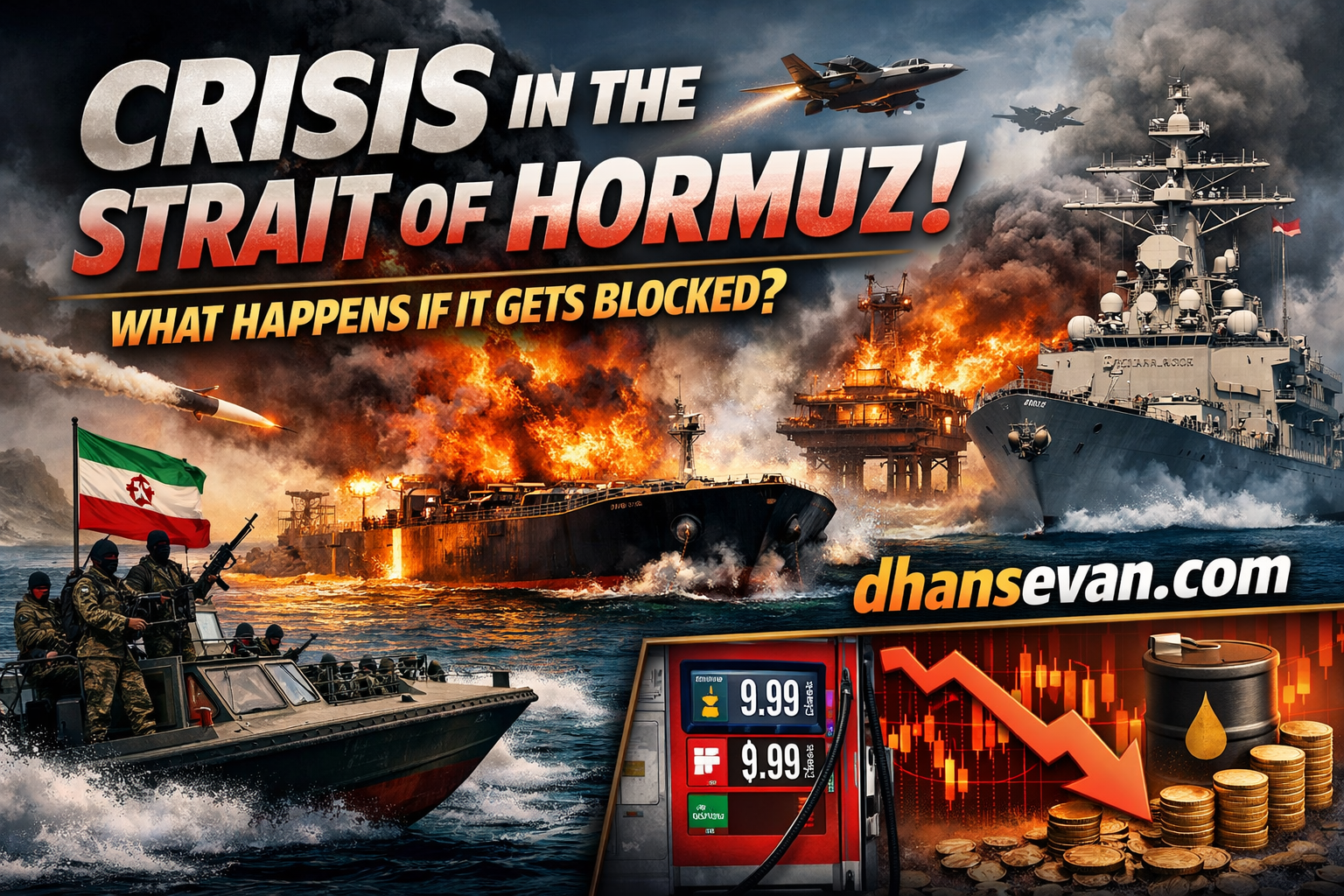
Global attention is turning toward the Strait of Hormuz as tensions rise. What could happen if this critical route is disrupted?
Dhansevan Team
Gaming Expert · Dhansevan Editorial Team
The Strait of Hormuz — a narrow waterway between Iran and Oman — has once again become the focal point of global geopolitical anxiety in 2026. With rising tensions between the United States and Iran, the world is watching closely as military posturing, diplomatic warnings, and economic calculations collide in one of the most strategically important chokepoints on Earth.
In this article, we break down why the Strait of Hormuz matters, what the current tensions look like, how they could affect oil prices and global markets, and what it all means for countries like India that depend heavily on Middle Eastern energy supplies.
---
What Is the Strait of Hormuz and Why Does It Matter?
The Strait of Hormuz is a narrow passage of water — roughly 33 kilometers wide at its narrowest point — that separates Iran to the north from Oman and the United Arab Emirates to the south. It connects the Persian Gulf with the Gulf of Oman and ultimately the Arabian Sea, making it the only sea route for oil exports from many of the world's largest producers.
According to the U.S. Energy Information Administration, approximately 20-21 million barrels of oil pass through the Strait of Hormuz every single day, representing roughly one-fifth of the world's total petroleum consumption. In addition to crude oil, the strait is a critical route for liquefied natural gas (LNG) shipments, with Qatar — the world's largest LNG exporter — relying on it almost exclusively.
Countries that depend on oil flowing through this strait include India, China, Japan, South Korea, and many European nations. Any disruption here doesn't just affect the Middle East — it sends shockwaves through the entire global economy.
---
The Current USA-Iran Tension in 2026
Tensions between the United States and Iran have escalated significantly in 2026 due to several factors:
- **Iran's nuclear program** has continued to advance, with reports suggesting Iran is closer to weapons-grade uranium enrichment than ever before.
- **US sanctions** on Iranian oil exports have been tightened, targeting both Iranian crude and the shipping companies and nations that facilitate its trade.
- **Military build-up** in the Persian Gulf region, with the US deploying additional naval assets including carrier strike groups and surveillance aircraft.
- **Iranian threats** to restrict passage through the strait in retaliation for what it calls "economic warfare" through sanctions.
Senior political figures on both sides have issued strong statements. The United States has warned of severe consequences if Iran interferes with freedom of navigation, while Iran has stated that if its oil exports are blocked, no country's oil will pass through the strait either.
---
What Happens If the Strait of Hormuz Gets Blocked?
A full or partial blockade of the Strait of Hormuz would have devastating consequences for the global economy. Here is what experts predict:
1. Oil Prices Could Spike Dramatically
Even a temporary disruption could push crude oil prices above $150-200 per barrel. During previous periods of tension (such as the 2019 tanker attacks), oil prices jumped 15-20% within hours. A prolonged blockade could cause even more extreme price movements.
2. Inflation Would Accelerate Globally
Higher oil prices translate directly into higher transportation costs, manufacturing costs, and ultimately consumer prices. Countries like India, which imports over 85% of its crude oil, would see immediate pressure on fuel prices, food costs, and overall inflation.
3. Stock Markets Would React Sharply
Global financial markets are highly sensitive to energy supply disruptions. A Strait of Hormuz crisis would likely trigger sharp sell-offs in equity markets worldwide, with energy and defense stocks potentially being the only beneficiaries.
4. Supply Chain Disruptions
Modern global supply chains depend on predictable shipping routes. A blockade would force oil tankers to seek alternative routes around the southern tip of Africa, adding weeks and significant costs to shipping. This would affect not just oil but all goods transported through the region.
5. Impact on India Specifically
India is particularly vulnerable because over 60% of India's crude oil imports pass through the Strait of Hormuz, and India imports over 85% of its total oil needs. Higher oil prices directly increase India's current account deficit, fuel price hikes affect transportation, agriculture, and manufacturing costs, and the Indian rupee could depreciate under the pressure of a higher import bill.
---
Historical Context: Previous Strait of Hormuz Crises
This is not the first time the Strait of Hormuz has been at the center of international tensions:
- **1980s Tanker War**: During the Iran-Iraq War, both nations attacked oil tankers in the Gulf, leading to the "Tanker War" that disrupted shipping and drew US naval involvement through Operation Earnest Will.
- **2012 Sanctions Crisis**: When the EU and US imposed strict sanctions on Iran's oil exports, Iran threatened to close the strait entirely, leading to months of heightened military tension.
- **2019 Tanker Attacks**: Several oil tankers were attacked near the strait. The US attributed the attacks to Iran, which denied involvement. Oil prices surged and insurance costs for Gulf shipping skyrocketed.
Each of these episodes showed that even the threat of disruption — without an actual blockade — is enough to cause significant economic damage through uncertainty and risk premiums.
---
Diplomatic Efforts and Possible Outcomes
Despite the alarming rhetoric, there are several possible outcomes to the current tension:
**Scenario 1: Diplomatic Resolution** — Both sides agree to return to negotiations, potentially reviving a modified version of the JCPOA (Iran nuclear deal). This is the best-case scenario for global markets and would likely bring oil prices down.
**Scenario 2: Managed Escalation** — Tensions remain high with occasional incidents (drone strikes, cyber attacks, proxy conflicts) but without a direct military confrontation. Oil prices stay elevated but manageable.
**Scenario 3: Military Confrontation** — A direct military clash that could temporarily disrupt strait traffic. While unlikely due to the catastrophic economic consequences for all parties, it remains a possibility that markets must price in.
**Scenario 4: Status Quo** — Tensions persist at current levels without significant escalation. Markets adapt to a higher risk premium on oil prices, and the situation becomes the new normal.
Most geopolitical analysts believe that Scenario 2 or 4 is the most likely outcome, as neither the US nor Iran wants a full-scale war. However, miscalculation or escalation through proxy forces remains a real risk.
---
What Should You Watch For?
If you are following this situation, key indicators to monitor include:
- **Oil price movements**: Sudden spikes often signal new developments
- **US naval deployments**: Increased military assets in the Gulf region
- **Iranian shipping activity**: Changes in Iranian oil export volumes
- **Diplomatic signals**: Statements from both governments about willingness to negotiate
- **Insurance premiums**: Shipping insurance costs for Gulf routes are a reliable early warning indicator
---
Conclusion: A Global Pressure Point That Affects Everyone
The Strait of Hormuz is not just a narrow waterway on a map — it is a critical artery of the global economy. The current US-Iran tensions in 2026 have once again highlighted how vulnerable the world's energy supply is to geopolitical conflict in this region.
For India and other energy-importing nations, the situation demands close attention. Higher oil prices, increased inflation, and currency pressure are all potential consequences of escalation. While diplomatic resolution remains the most likely outcome, the risks are real and the stakes are enormous.
Whether you are an investor monitoring markets, a business owner tracking input costs, or simply a citizen watching fuel prices, what happens at the Strait of Hormuz in 2026 will affect your daily life — making it one of the most important geopolitical stories of the year.
About the Author
Dhansevan Team
The Dhansevan editorial team consists of passionate gamers and tech enthusiasts who test and review every game before publishing. Our writers bring first-hand gaming experience and follow strict editorial standards to ensure accurate, helpful content for our readers.
Disclaimer: This article is for informational purposes only. Game features, availability, and earning potential may vary. Always download games from official sources and read their terms of service. Dhansevan does not guarantee any specific results from using the apps mentioned above.